Closed: Tuesday 27 October through Sunday 1 November. Please note: the workshop is from now on also closed on Thursdays.
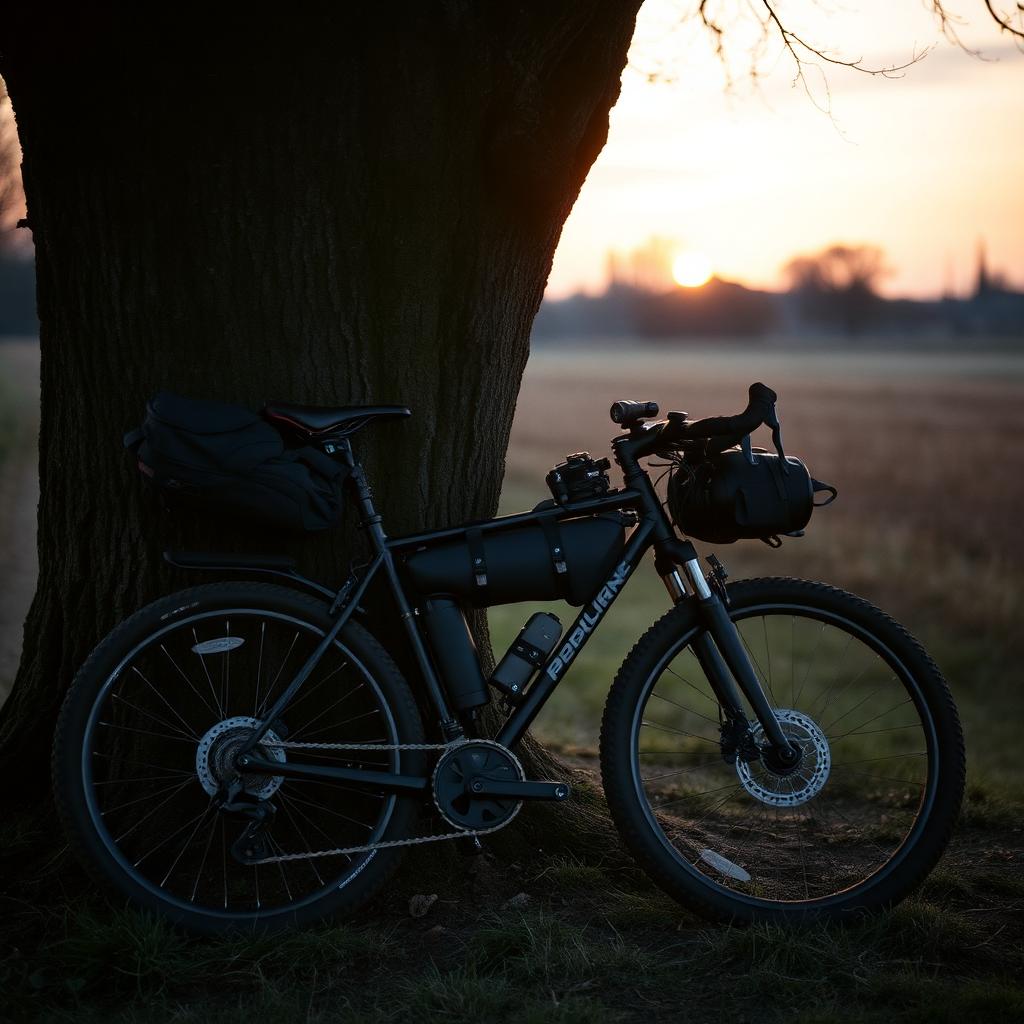
DIY maintenance · Short checklists
Maintenance is the anticipation of your next adventure.
No lecture. Just the basics in one place: what you lay out the evening before, what you eat, and why your chain deserves a bit of drying time after the ride.
"I'm Thomas. I ride the odd long ride like Flatlands300 alternated with a long social ride on Sunday (FONDAG) from the atelier. Nothing complicated below: just what works for me. Take whatever you can use."
T-1 · the night before
Laying out your kit = no excuses
Sure, you make sure your bike shines. But also just lay out your gear, fill your bottle, and dress for the weather that's actually coming, not the weather you're hoping for. Saves a lot of hassle and a lot of excuses in the morning.
Clothing rules by temperature
- < 5 °C
- Winter jacket, thermal bib, long thermal baselayer, winter gloves (lobster gloves below zero), thick neoprene overshoes, buff.
- 5 – 10 °C
- Winter jacket or thermal jersey, thermal bib or leg warmers, mid-weight baselayer, long gloves, wind overshoes.
- 10 – 15 °C
- Long-sleeve jersey or short sleeve with arm warmers, bib + knee warmers, light gilet, light gloves, toe-covers.
- 15 – 20 °C
- Short-sleeve jersey, bib, mesh baselayer. Gilet in the back pocket for the descent or an early start.
- > 20 °C
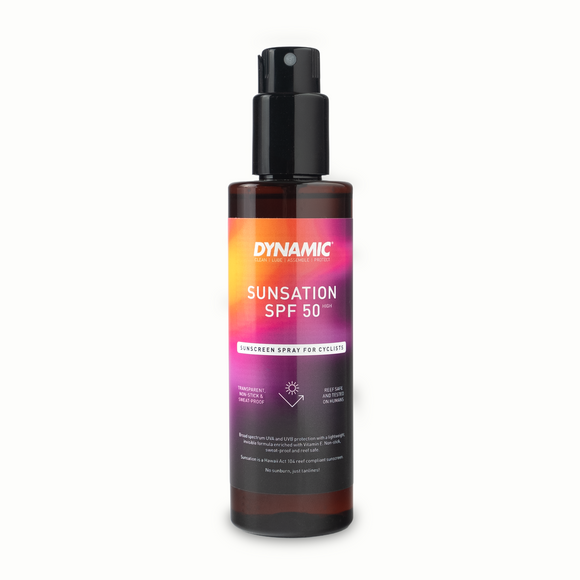
- Light mesh jersey, bib, summer baselayer. And above all: sunscreen.
- Lay out bib shorts, jersey, socks, gloves
- Check the outside temperature, not the season
- Rain forecast? Add overshoes and a gilet
T-1 · the night before
Fill your bottles with your own Maurten mix
Everyone talks about carb loading, but honestly: under 80 km it doesn't make much difference. Just eat normally. It's only from around 100+ km or a long day in the saddle that a plate of pasta the night before really starts to do something. For Flatlands300, yes; for a loop around the Rotte, obviously not.
And those four-euro-a-pop Maurten sachets? There's another way. The secret is in the ratio of maltodextrine to fructose: 1 : 0.8. Glucose enters your gut via the SGLT1 transporter, fructose via GLUT5. Combine them and your body can absorb up to 90 – 120 g of carbs per hour instead of the classic 60 g.
DIY sports drink · 80 g carbs per 750 ml bottle
- • 45 g maltodextrine
- • 35 g fructose
- • ½ teaspoon salt (≈ 0.5 – 1 g sodium)
- • A splash of lemon juice for taste
Shake well, into the fridge. Costs you a few tenners per kilo instead of per bottle.
- 2 bottles in the fridge (1× water, 1× DIY mix)
- Bars, gels or quick jellies in the back pocket
- Under 80 km: just eat what you always eat
- Over 100 km: pasta or rice, simple, nothing new
06:30 · the morning
Porridge + coffee: hydrate or fuel?
Two hours before the start, a bowl of porridge with banana and honey. Espresso alongside. Simple rule of thumb: 1 to 4 grams of carbs per kilo of body weight, two to three hours before you leave. For a 75 kg rider that's quickly a substantial bowl, not just that one biscuit.
Out on the road the question is: hydrate or fuel? It depends on how long and how hard.
Intake per hour on the bike
- < 2 hours
- Mostly water or electrolytes. Only add fuel if the pace is high (30 – 60 g).
- 2 – 4 hours
- 60 – 90 g of carbs per hour. A mix of bottle and solid food.
- 4+ hours
- 90 – 120 g per hour, but your gut has to be able to handle that. Train it, don't improvise.
Once you're thirsty, you're already behind. Same with hunger: if you feel it, it's already too late.
- Porridge + banana + honey, 2h before start
- Espresso or black coffee
- A sip every 15 min: even without thirst
- A bite every 30 – 45 min, following the schedule above
the ride
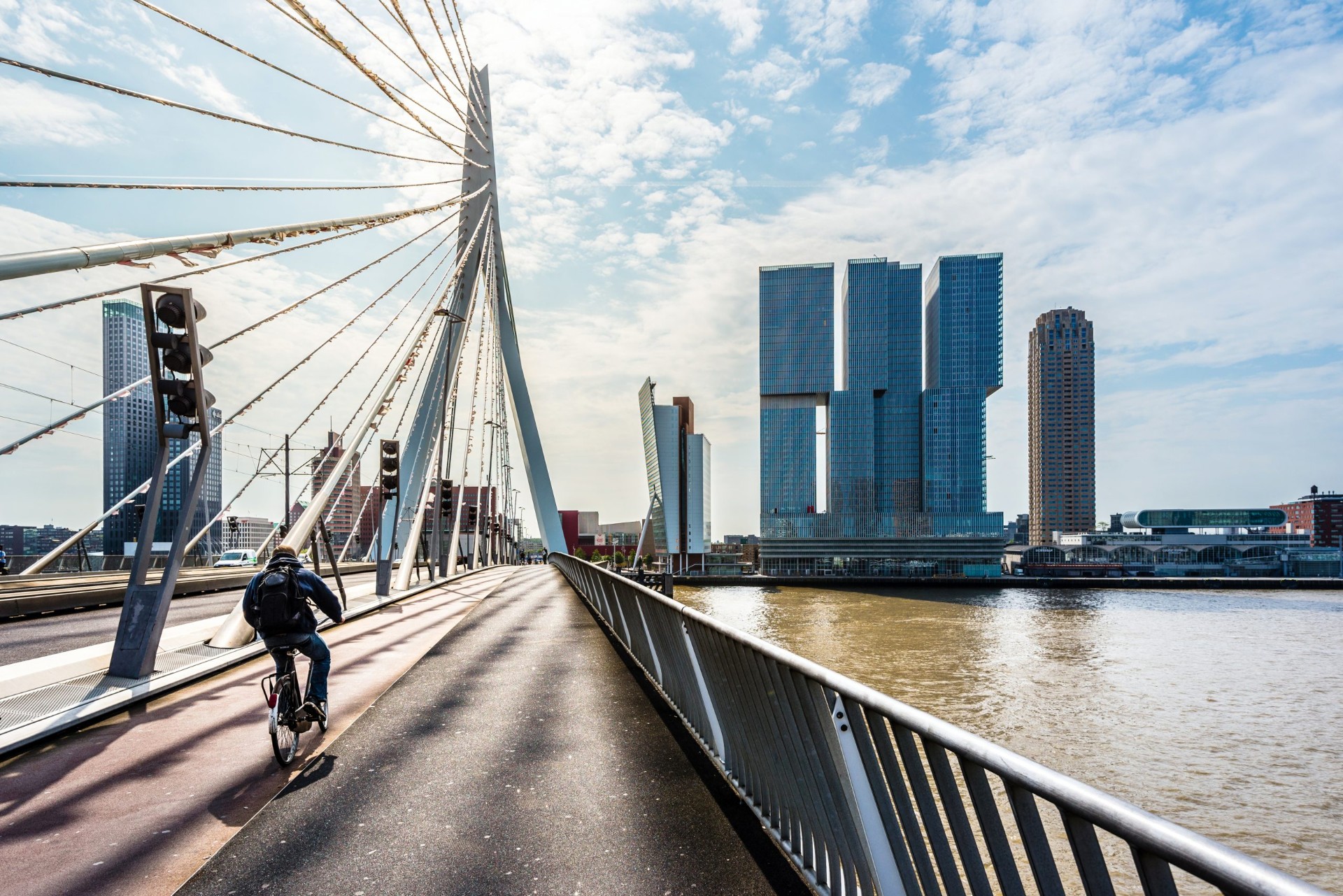
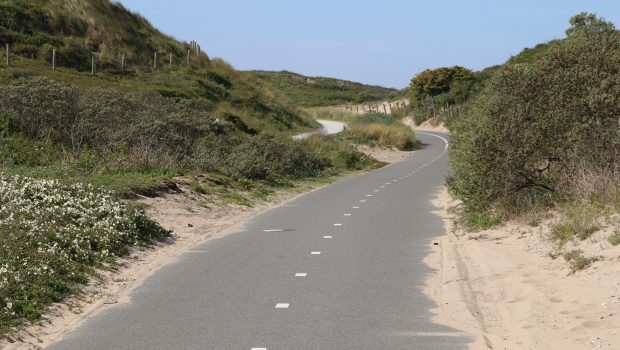
From Oudedijk into the polder: our favourite loops
Personally I can never start a ride calmly. I always set off too hard and sweat buckets. Not how it's supposed to go at all. But then again, who doesn't want to give their two-wheeled love a proper hard push now and then? That's what we do it for.
We've gathered our favourites in a Komoot collection. Krimpenerwaard, Voorne-Putten, Hoeksche Waard, Kinderdijk & Biesbosch, Maasland, all ridable straight from the atelier on the Oudedijk. Pick one and roll with it.
Komoot · The finest cycling routes from Rotterdam
- • Krimpenerwaard & Reeuwijkse plassen: 80 km
- • Voorne-Putten and back: 101 km
- • Hoeksche Waard loop: 101 km
- • Kinderdijk & Biesbosch: 83 km
- • Twists and turns in Maasland: 70 km
- Start calmly (at least try to)
- First hour talking, pace only after that
- A good route means headwind on the way out
- Route loaded onto your bike computer beforehand
after the ride · 30 min
Drink first. Then eat. Then shower. Then the bike.
Order matters. Drink first: only eat afterwards. If you tuck into a plate of pasta straight away, all your blood heads to your gut, while your muscles and skin still badly need it for recovery and cooling down. Result: a stomach full of bricks and poor absorption.
Aim to drink back one and a half times the fluid you lost, with a pinch of salt to actually help your body hold onto that fluid. Only then eat: 1 – 1.5 g of carbs per kilo plus 0.3 g of protein per kilo, within the hour. For 75 kg that's roughly 90 g of carbs and 22 g of protein. A sandwich, a bowl of yoghurt with fruit, or that second plate of pasta.
- First: drink back 1.5× the fluid lost, with salt
- Then: 1 – 1.5 g carbs + 0.3 g protein per kg
- Then a shower
- Only then tackle the bike
after the ride · the bike
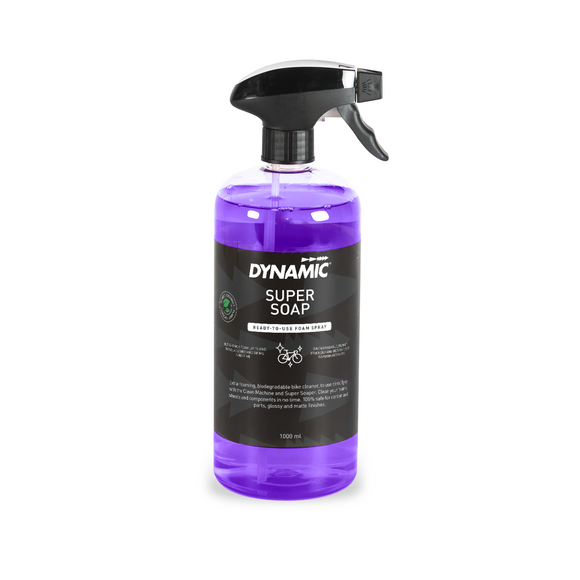
Wash with a bucket, not a pressure washer
Lukewarm water, a splash of bike shampoo, a soft sponge. No pressure washer near your bearings: they'll survive it once, not ten times. Top to bottom, wheels last. Dry with a microfibre cloth. Leave the chain for a bit.
- Lukewarm water + mild bike shampoo
- Top (saddle/frame) to bottom (wheels)
- No pressure washer towards bearings and headset
- Dry with a microfibre cloth
after the ride · the chain
The chain: a ritual of hours, not minutes
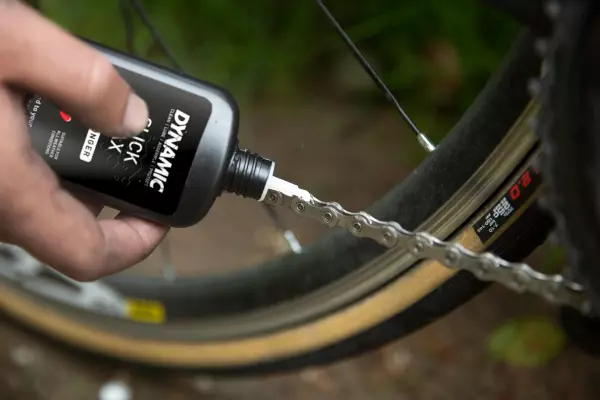
Most people actually know this already. But sure, when Thomas says it, suddenly they believe it. A quick squirt of wet lube over the top doesn't work. A well-maintained chain is dry on the outside and greasy on the inside. That takes time.
- Get it clean with degreaser until the cloth stays clean
- Let it dry for an hour: a real hour
- Lube drop by drop (wax or wet)
- Preferably let it drip overnight
- Wipe off excess lube with a cloth
What should be in your bag, at a minimum
For when the mechanic is too far away.
- Multitool with chain breaker
- Two inner tubes
- Mini pump or CO₂
- Tyre levers
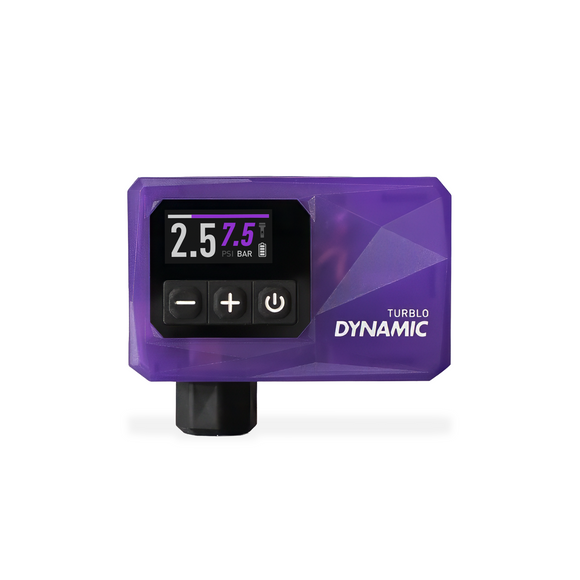
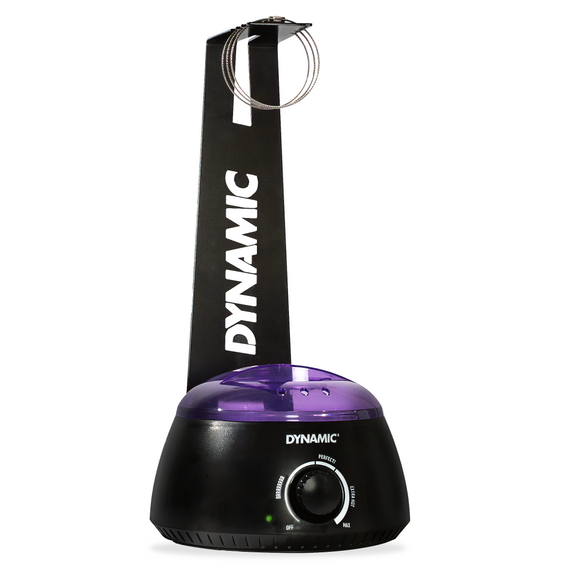
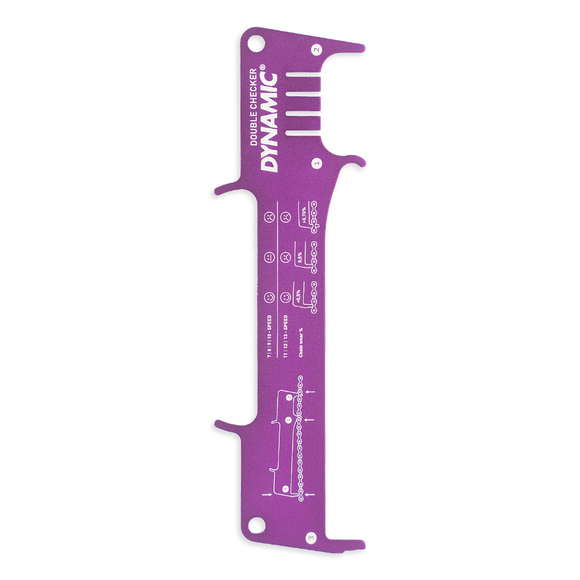
In the atelier · Dynamic Bike Care
A few things we ride on ourselves
We keep these in the atelier. Drop by for advice, or order directly from Dynamic.
BE NICE
Don't hand your bike in dirty at your mechanic's.
Not because 'we' get grumpy. More because we love bikes too much. Bringing in a clean bike is a small gesture: for the mechanic, for your bike, and for the hours you're still going to put on it.